 |
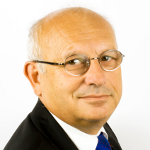
Guy Daculsi (France) - KEYNOTE LECTURE in Hommage to the so large contributions to the field of Bioceramics and ISCM to Racquel LeGeros |
|---|---|
INSERM Research Director, DRE class exceptional, National Institute Medical Research, Director SC3M Electron Microscopic, Micro imaging and Micro characterization Center Nantes University; FBSE, Fellow Biomaterials Science and Engineering; ISCM General secretary, International Society for Ceramic in Medicine; Chief Editor Bioceramics Development and Applications. Biologist and crystallograph, specialized in biological apatite and calcium phosphate Bioceramics. Main interest in Calcium phosphate based biomaterials and calcified tissue. Clinical research scientific coordinator in Orthopedics, maxillofacial surgery, ENT. More of 430 publications, 398 communications including 84 invited conferences, 11 patents including 8 internationals. International contribution to the field of Bioceramics and Bone substitutes has been recognized by IUSBSE during the 8th World Congress on Biomaterials. A pioneer in Bioceramics for Bone regeneration. |
Keynote
 |
Paul Ducheyne (USA) - Nanoporous bioceramics for the controlled release of drugs and growth factors - Bioceramics in today's cost conscious health care environment. |
|---|---|
Paul Ducheyne is Professor of Bioengineering, Professor of Orthopaedic Surgery Research and Professor of Biomaterials in Dentistry at the University of Pennsylvania, Philadelphia, USA. He is the Director of its Center for Bioactive Materials and Tissue Engineering. He also is Visiting Professor at the University of Leuven, Belgium. Paul Ducheyne has Materials Science and Engineering degrees from the K.U. Leuven. Subsequent to postdoctoral research at the University of Florida, he started his career at the K.U. Leuven where he was one of the co-founders of the Curriculum in Bioengineering. He has organized a number of symposia and meetings, such as the Fourth European Conference on Biomaterials (1983), the Engineering Foundation Conference on Bioceramics (1986) which led to the New York Academy of Sciences publication: "Bioceramics, material characteristics versus in vivo behavior", and the Sixth International Symposium on Ceramics in Medicine (1993). He has lectured around the world and serves or has served on the editorial board of 10 scientific journals in the biomaterials, bioceramics, bioengineering, tissue engineering, orthopaedics and dental fields. He has authored more than 300 papers and chapters in a variety of international journals and books, he has edited 10 books, and he has been granted more than 40 patents. Paul Ducheyne has been secretary of the European Society for Biomaterials, is Past President of the Society for Biomaterials (USA) and Past President of the International Society for Ceramics in Medicine. Among other recognitions, he is a fellow of the American Association for the Advancement of Science (AAAS), he was the first Nanyang Visiting Professor at the Nanyang Institute of Technology, Singapore and he has received the C. William Hall Award from the Society for Biomaterials. Paul Ducheyne founded Gentis, Inc., which focuses on breakthrough concepts for spinal disorders. Previously, he founded Orthovita (NASDAQ: VITA) in 1992 and served as Chairman of its Board of Directors until 1999. Orthovita focuses on bioceramic implant materials for orthopaedics. |
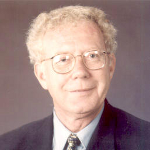 |
Larry L. Hench (USA) - BIOCERAMICS: Forecast for the Future |
|---|---|
Larry L. Hench is currently Professor of Ceramic Materials in the Department of Materials, and he is also Co-Director of the Tissue Engineering and Regenerative Medicine Centre at Imperial College, London, UK. He assumed the Chair of Ceramic Materials at Imperial College in December 1995, following 32 years at the University of Florida where he was Graduate Research Professor of Materials Science and Engineering, Director of the Bioglass® Research Center and Co-Director of the Advanced Materials Research Center. He completed B.S. and PhD degrees at the Ohio State University in 1964. Larry Hench has been at the forefront of the revolution that has occurred in the past four decades in the field of bioactive glass. In 1969 Professor Hench discovered Bioglass®, the first man-made material to bond to living tissues. This unique range of soda-calcia-phospho-silica glasses is used clinically throughout the world for repair of bones, joints and teeth. This development, together with the accompanying studies of the mechanisms of glass surface reactions and chemical processing of materials, has led to many international awards, including the MRS Von Hippel Award and publication of nearly 520 research papers, 22 books and 23 patents. Larry Hench has served as President of the Society of Biomaterials, Chairman of the Glass Division of the American Ceramic Society, Chairman of the Gordon Research Conference on the Science and Technology of Biomaterials, and Chairman and Co-Chair of many international conferences. He has also served on the editorial boards of different journals. |
 |
Kunio Ishikawa (Japan) - Carbonate apatite bone replacement |
|---|---|
Professor at Department of Biomaterials, Kyushu University, Japan Fields of Interest: Biomaterials for the Reconstruction and Regeneration of Bone Defect, Apatite, Calcium Phosphate, Self-setting Cement, Implant Materials Education:Ph. D., Osaka University of Tokyo, 1990 Membership of Academic Societies: International Association for Dental Research, International Society for Ceramics in Medicine, Nano Biomedical Society, Japanese Society of Ceramics, Japanese Society for Dental Materials and Devices Awards & Honors: Award for Encouragement of Research, Japanese Society for Biomaterials, Japan (1999); Best Presentation Award, Asian BioCeramics (2003); Best Presentation Award, Japanese Society for Dental Materials and Devices (2005); IUMRS Encouragement Award, International Union of Materials Research Society (2008); Best Presentation Award, AUN/SEED-Net (2009). |
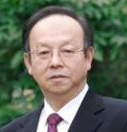 |
Xingdong Zhang (China) |
|---|---|
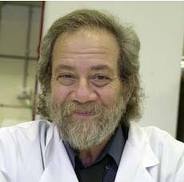
Professor and Honorary Director of National Engineering Research Center for Biomaterials at Sichuan University in China, Academician of Chinese Academy of Engineering and Chairman of Chinese Committee for Biomaterials. He graduated from the department of physics at Sichuan University in 1960 and has been engaged in biomaterials studies since 1983. His academic research focused on innovative biomaterials and medical implants for regenerative medicine and tissue engineering, especially on tissue-inducing biomaterials, calcium phosphate-based biomaterials, surface and surface modification of biomaterials, bone tissue engineering and implants for dental and orthopaedic applications. He has received numerous awards, including Chinese National Natural Science Award (2007), Chinese National Science and Technology Progress Award (1998). Fellow of Biomaterials Science & Engineering, IUSBSE(2000), and Chinese National Expert with Outstanding Contribution (1992). |
 |
Besim Ben-Nissan (Australia) - Biomimetics and Marine Materials in Drug Delivery and Tissue Engineering: from natural role models, to bone regeneration and repair. |
|---|---|
Professor Besim Ben-Nissan has higher degrees in Metallurgical Engineering (ITU), Ceranic Engineering (University of New South Wales) and a Ph.D. in Mechanical and Industrial Engineering/Biomedical Engineering (University of New South Wales). Over the last three decades together with a large numbers of PhD students he has worked on production and analysis of various biomedical implants, hydroxyapatite ceramics, advanced ceramics (alumina, zirconia, silicon nitrides), sol-gel developed nanocoatings for enhanced bioactivity, corrosion and abrasion protections, optical and electronic ceramics. He also has contributed in the areas of mechanical ¬properties of sol-gel developed nanocoatings. In the biomedical field, he has involved with the development of materials for implant technology (bioactive materials including conversion of Australian corals to hydroxyapatite bone grafts), biomimetics (learning from nature and its application to regenerative medicine), bio-composites, investigative research on biomechanics and Finite Element Analysis (jaw bone, knee, hip joints, hip resurfacing), reliability and implant design (modular ceramic knee prosthesis, femoral head stresses). He has initiated worlds first reliable ceramic knee and hydroxyapatite sol gel derived nanocoatings. Since 1990 he has published over 200 papers in journals, books and book chapters. He is one of the editors of the Journal of the Australian Ceramic Society and editorial board member of three international biomaterials journals. He has served as the Federal President and council member of Australian Ceramic Society (ACS), and International Society of Ceramics for Medicine and a board member of the Federation of the Advancement of Research in Medicine (FARM). He was awarded in 2000 "The Australasian Ceramic Society Award" for his contribution to Ceramic Education and Research and Development in Australia. He also received "Future Materials Award" in 2006 for his contribution to the biomedical materials field with Nanocoated materials and bone grafts. He has collaborated with a number of international groups in Japan, USA, Thailand, Finland, Israel and Turkey and held grants from the Australian Academy of Science andthe Japan Society for Promotion of Science for collaborative work in the biomedical field in USA and Japan respectively. |
 |
James C. Kirkpatrick (Germany) - In vitro models of the regenerative niche in bone Tissue Engineering |
|---|---|
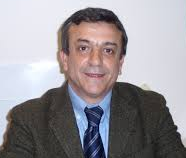
C. James Kirkpatrick has a triple doctorate in science and medicine (MD, PhD, DSc) from the Queen’s University of Belfast (N. Ireland) and since 1993 is Professor of Pathology and Chairman of the Institute of Pathology at the Johannes Gutenberg University of Mainz, Germany. Previous academic appointments were in pathology at the University of Ulm (1980-1985), Manchester University, UK (1985-1987) and the RWTH Aachen (1987-1993). He is a Fellow of the Royal College of Pathologists (FRCPath), London (since 1997) and an Honorary Professor at the Peking Union Medical College in Beijing and the Sichuan University in Chengdu, China (both since 2004). C. James Kirkpatrick is author/coauthor of 430 publications in peer-reviewed journals, and more than 1200 presentations to scientific meetings worldwide. He is a former President of both the German Society for Biomaterials (2001-2005) and the European Society for Biomaterials (2002-2007), and from the latter he received in 2008 the George Winter Award for his contribution to biomaterials in Europe. In 2010 he was awarded the Chapman Medal from the Institute of Materials, Minerals & Mining, London, UK for “distinguished research in the field of biomedical materials”. |
 |
Luigi Ambrosio (Italy) - Ceramic Reinforcing Polymers for Bone Regeneration |
|---|---|
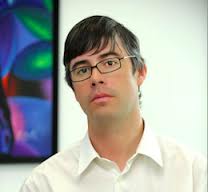
Dr. Luigi Ambrosio is Director of the Institute for Composite and Biomedical Materials, National Research Council of Italy, and Adjunct Professor of Biomaterials at University of Naples "Federico II'. Dr. Ambrosio’s research interests include design and characterisation of polymers and composites for medical applications and tissue engineering, rheology of biological fluids, structural properties of natural tissue, processing of polymers and composites, hydrogels and biodegradable polymers. He has published over 150 papers on international scientific journals and book, 16 patents, and over 250 presentations at international and national conferences. He has been nominated Fellow of the American Institute for Medical and Biological Engineering (March 2001), and Fellow of Biomaterials Science and Engineering (May 2004). He is member of Advisory Board and Guest Editor of International and National Scientific Journals, Council Member of the European Society for Biomaterials (ESB), VicePresident of the Italian Society of Biomaterials (SIB), President of the Interdisciplinary Biomaterials Group of the Italian Chemical Society and President of the European Society for Biomaterials (ESB). Dr. Ambrosio received the doctoral degree in Chemical Engineering (1982) from University of Naples "Federico II'. He was Research Associate at University of Naples (1983-1985), Research Associate at University of Connecticut, USA (1985-1986), and Visiting Scientist at Kontron Medical Inc., USA (1985- 1988). |
 |
Rui Reis (Portugal) - Biomimetic Strategies to Engineer Mineralised Human Tissues |
|---|---|
Rui L. Reis, PhD, DSc, Hon. Causa MD, FBSE, is 46 years. Heis both the Director of the 3B’s Research Group and of the ICVS/3B´s PT Government Associate LaboratoryofUniversity of Minho, Portugal. He is also the CEO of the European Institute of Excellence on Tissue Engineering and Regenerative Medicine(TERM) and the President and CSO of the company Stemmatters. He is an elected member of the General Council (the main governing board) of University of Minho. In addition, he is the World President-elect of TERMIS (Tissue Engineering & Regenerative Medicine International Society) and the editor-in-chief of the Journal of Tissue Engineering and Regenerative Medicine (Wiley-Blackwell). He is the Portuguese scientist with more publications ever, being a co-author of 720 ISI listed publications (more than 550 full papers in scientific journals), around 210 book chapters, 25 patents and 6 books. He is PI of projects totalizing around 40 MEuros (around 25 MEuros for his U. Minho group), including the very prestigious European Research Council (ERC) Advanced Grant. He has been cited around 10500 times and has an h-factor of 51. He was been awarded several major national and international scientific and innovation awards, including both the Jean Leray and George Winter Awards from the European Society for Biomaterials (ESB). He was also awarded a honoris causa degree by the University of Granada, Spain. |
 |
Roger Narayan (USA) - Laser Processing of Bioceramics |
|---|---|
Dr. Roger Narayan is a Professor in the Joint Department of Biomedical Engineering at the University of North Carolina and North Carolina State University. He is an author of over 150 publications as well as several book chapters on processing, characterization, and modeling of biomedical materials. He currently serves as editor-in-chief of Materials Science and Engineering C: Materials for Biological Applications (Elsevier), which is a leading journal in the biomaterials field. Dr. Narayan has also edited several books, including the textbook Biomedical Materials (Springer) and the handbook Materials for Medical Devices (ASM International). Dr. Narayan has received several honors for his research activities, including the NCSU Alcoa Foundation Engineering Research Achievement Award, the NCSU Sigma Xi Faculty Research Award, the University of North Carolina Jefferson-Pilot Fellowship in Academic Medicine, the National Science Faculty Early Career Development Award, the Office of Naval Research Young Investigator Award, and the American Ceramic Society Richard M. Fulrath Award. He has been elected as Fellow of ASM International, AAAS, and AIMBE. |
 |
Julian R. Jones (UK) - Bioactive Glasses: from Hench to Hybrids |
|---|---|
Julian Jones is a Reader in Biomaterials at Imperial College London. His research interests are in scaffolds for regenerative medicine. His work on process development of foamed gel-derived bioactive glass produced the first 3D porous scaffold made from bioactive glass). His team has more recently produced tough and flexible bioactive inorganic/ organic hybrid scaffolds. His group's other research include; therapeutic nanoparticles; protein adsoption and cellular responses to biomaterials. In 2010 he was presented with Robert L. Coble Award by the American Ceramics Society. He recently co-edited an introductory textbook on Bio-glasses and has more than 70 journal articles, with 450 citations per annum. He is a Visiting Professor at Nagoya Institute of Technology, Japan; Chair of the Biomedical Glass Technical Committee of the International Commission on Glass (ICG) and the co-Chair of the American Ceramics Society’s Bioceramics Technical Interest Group. |