November 7th
November 8th
November 9th
November 10th
Many touristic options will be available:
More details will be provided soon. |
Social Program
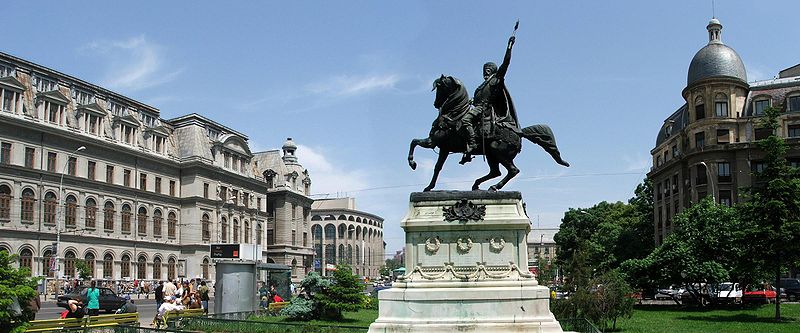 |
HALF DAY BUCHAREST CITY TOUR (40 Euro) |
|---|
The tour will start in the morning at Howard –Johnson Grand Plaza Hotel Bucharest and following a four hour itinerary will show the participants the most interesting sights of Bucharest downtown with entrance at the Parliament Palace and The Village Museum. The tour includes transport, guide services in english, the entrance fees at the Parliament Palace and the Village Museum. The itinerary will include: Free Press Square (Piata Presei Libere) – The Arch of Triumph (Arcul de Triumf) – Victoriei Square (Piata Victoriei) – Cotroceni Palace (Muzeul Cotroceni) – Revolution Square (Romanian Atheneum, Revolution’s Memorial) – The Palace of Parliament (Palatul Parlamentului) – Union Square (Piata Unirii) – University Square (Piata Universitatii) – Romana Square (Piata Romana) – Victoriei Square – Charles de Gaulle Square (Piata Charles de Gaulle) – The Village Museum (Muzeul Satului). Mandatory condition: Minimum 4 persons per trip. |
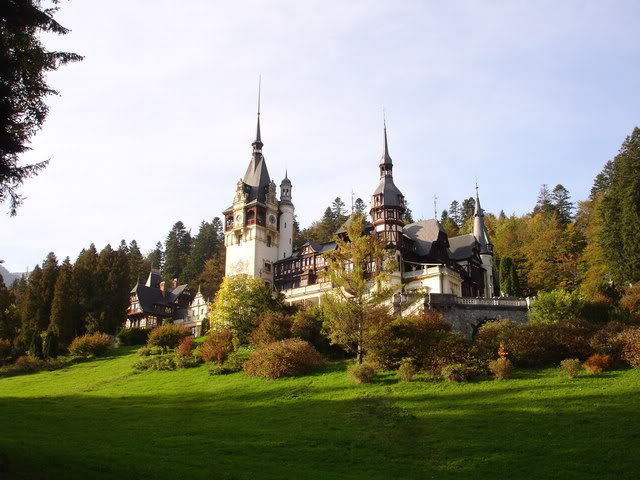 |
Full Day Trip on Prahova Valley (120 Euro) |
|---|
Duration: This day trip to Sinaia, Bran & Brasov takes aprox. 11 hours. Pick-up/drop off point: The trip to Prahova Valley & Brasov starts and ends at conference venue, Howard –Johnson Grand Plaza Hotel, Bucharest, Romania. Included in the price: Transport; Professional guide assistance during the whole trip English speaking; Box Lunch; Entrance fees at the presented sights. Mandatory condition: Minimum 8 persons per trip.
The trip reveals you 2 attraction points of maximum interest (Peles Castle, Bran Castle), both situated in a picturesque region of the Carpathians mountains. Also you have the chance to visit the Black Church from Brasov, the biggest gothic cathedral at East of Vienna. Located in Sinaia, Peles Castle is considered by many one of the most beautiful castles in all Europe. The Peles Castle was built at the initiative of King Charles I, to serve as a summer residence, invested with political, cultural and symbolic functions. The castle was built in wood, stone, bricks and marble and comprises more than 160 rooms. The representative style used is German Renaissance, but one can easily discover elements belonging to the Italian Renaissance, Gothic, German Baroque and French Rococo style. Peles is surrounded by seven terraces decorated with statues (sculptured by the Italian, Romanelli), stone-made-wells, ornamental vases and Carara marble. The architects used an abundance of wooden decoration, both for the exterior and for the interior of the castle, which confers a very special quality to the building. The Bran Castle is situated between Bucegi and Piatra Craiului Mountains, right where you enter Rucar-Bran Pass. The first documentary attestation of Bran Castle is the letter written in 1377 by the Hungarian Ludovic I D'Anjou, giving the inhabitants of Brasov some privileges. The building of the fortress was imposed by strategic and economic reasons. The strategic reasons underlined by the expansion of the Ottoman Empire which, by the end of the XIV century, began threatening the south-eastern borders of Transylvania; the economic reasons, given by the fact that the commercial road, one of the most important access ways connecting Transylvania to Wallachia, crossed this area. The building has four towers positioned at the four cardinal points. The walls are made of stone blocks, the rooms and narrow corridors constitute a mysterious labyrinth of ghostly nooks and secret chambers, whilst in the inner courtyard there are artesian wells, connected to an underground network. This castle came to be connected with the legend of Dracula the Vampire. Dracula – as known today – represents the result of the intersection of some real historical events, legendary, related to the reign of Vald Tepes, of mentions of some chroniclers of those times, aiming to put the great voivode in a bad light, amplified in the upcoming centuries by the association with the character of fiction novel "Dracula", issued in England in 1897, written by the Irish writer Bram Stocker. |